Showing posts with label cultural appropriation. Show all posts

Friday, 23 November 2018

Does fashion have a cultural appropriation problem?


Gigi Hadid in dreads for Marc Jacobs, Gucci models in Sikh-style turbans, Victoria's Secret angels in Native American headdresses.

Across the fashion industry, many top designers have faced accusations of cultural appropriation.

In 2015 Isabel Marant was accused of plagiarising the traditional costume of a Mexican community, a year later Gucci faced a backlash for showing white models in Sikh-style turbans and in 2017 Vogue was criticised for a shoot in which model Karlie Kloss was dressed as a geisha.

Only last month Vogue was again accused of cultural appropriation for a shoot showing Kendall Jenner with an "afro".
Now Dior is the latest brand to find itself caught up in the row over its campaign featuring Jennifer Lawrence.

Its Cruise 2019 campaign said it references "the escaramuzas - empowered and highly-skilled Mexican horsewomen" as well as Chilean characters from a novel.

Some people on social media have called out the brand - questioning its decision to cast a white actress in a campaign honouring Mexican heritage.

One person on Instagram accused the brand of "exploiting our culture for your profits" while another asked why the fashion house hadn't used "someone from the culture you are inspired by to represent them".

But others defended it saying "this isn't offensive, it's celebrating culture" and that "other people can also share your culture if they do it with respect".

Dior has since posted images along with captions which say it worked with eight Mexican female photographers for a shoot in their native country for the latest issue of its magazine.

Article here

Wednesday, 24 October 2018

Are the fashion and beauty industries appropriating witch culture?


All things mystical are having a moment in both fashion and beauty—and while it’s a moment that’s been stretching on for some time, it has now reached fever pitch. Stevie Nicks-inspired frocks are on the rise, and sound baths have replaced traditional runway show soundtracks. Sage and crystals are now sold alongside our favorite skin-care products, and there are bath salts and body oils designed for each phase of the moon.

Not dissimilarly to how brands flocked to mermaids and unicorns, capitalizing on queer culture, they’re now doing the same with witchcraft—and making big money off the culture of a marginalized group. And, as would be expected, this appropriation is causing problems.

Last month, fragrance brand Pinrose teamed up with Sephora to launch something they called a “Starter Witch Kit,” which consisted of tarot cards, a crystal, a white sage smudge stick, and a set of fragrances. And, well, it pissed off a lot of actual witches, and for a number of reasons. Not only did they feel that it was disrespectful to their culture, but there was concern about the inclusion of white sage, which has a very sacred meaning and use to indigenous people in North America.

Read more here

Tuesday, 7 November 2017

When does cultural inspiration become appropriation in the fashion world?


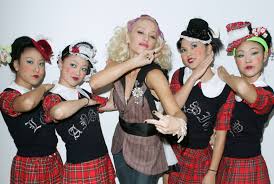
Gwen Stefani
Years before cultural appropriation became the buzzword it is today, pop sensation Gwen Stefani debuted her controversial single Harajuku Girls. Inspired by Japanese street fashion, the song featured backup dancers dressed as Harajuku girls, who doted on her from behind but never spoke in public. While critics panned it as blatant cultural appropriation, Stefani called it cultural appreciation.

The debate brought into the mainstream by the No Doubt hitmaker over a decade ago still rages on today. Journalists are no longer the lone authority; Twitter, Instagram and Facebook users make or break the controversy around any subject today.

London-based independent exhibition curator, Tory Turk, agrees. “The reason why the subject of ‘cultural appropriation’ in fashion could be seen as more problematic is because the jury has changed. The social media crowd can decide whether it’s cultural appropriation or cultural inspiration, and ultimately decide whether it is distasteful or not.”

Designer John Galliano, in his 20 years at Dior, famously showcased collections such as “A Voyage on the Diorient Express, or the Story of the Princess Pocahontas” in 1998, which featured native American attire, and Japanese and tribal pieces. There was little outrage.

Read more here